
English| EUR
Suggested for you
More currencies
Choose a language
Performance dates at the Real Escuela Andaluza del Arte Ecuestre shift with the season, and the calendar rarely looks the same two months running. This guide sets out how the Jerez horse show schedule is built, which mornings favour visitors, and where the confirmed dates are published. Read it before fixing travel dates for Jerez de la Frontera.
Quick answer
The Royal Andalusian School of Equestrian Art runs Monday to Friday, 10:00–14:00, and closes Saturday and Sunday, so every performance and training session falls inside that weekday window. Exhibition dates rotate month to month and are published on realescuela.org. On days without a show, morning visitors see the same stallions rehearsing in the arena.
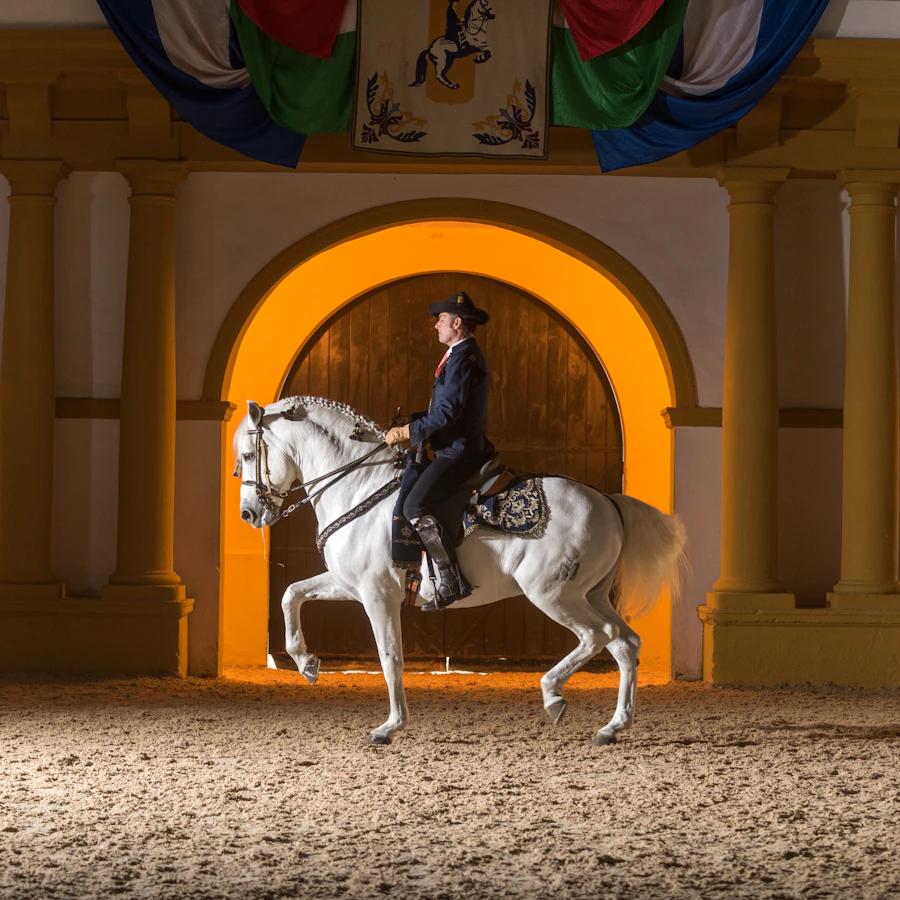
The palace at the heart of the grounds, the Recreo de las Cadenas, was designed by Charles Garnier, the architect of the Paris Opera House. It was built in the 1860s for a sherry family, long before horses trained on the lawns around it. The Royal Andalusian School of Equestrian Art took over the estate a century later, founded in 1973 by Álvaro Domecq Romero and granted royal status in 1987. Anyone reading a Jerez horse show schedule is therefore reading the timetable of a working academy, not a theatre. Riders, grooms and Pura Raza Española stallions keep a training rhythm first; the public performance is layered on top of it. That distinction shapes the whole calendar. The signature exhibition, Cómo Bailan los Caballos Andaluces, or How the Andalusian Horses Dance, is a choreographed display of classical dressage and doma vaquera, the working-country riding style of the Andalusian countryside. It does not run every day. The programme changes little from year to year, but its placement in the week does. Performance dates rotate through the year, thickening in spring and summer and thinning around public holidays, and the school publishes the confirmed calendar on realescuela.org rather than fixing it a year in advance. Visitors arriving on a non-performance morning are not turned away. The short tour opens the stables, the harness rooms and the Carriage Museum, and training in the main arena continues in plain view. The estate houses its own stud, saddlery and harness workshop, so the animals in the arena are also the animals in the stables. For many travellers the rehearsal is the more revealing hour: no music, no costume, just the corrections. Planning around this is straightforward once the pattern is clear. The grounds keep a weekday rhythm and close at the weekend, which means a Saturday arrival in Jerez de la Frontera finds the gates shut, a detail that catches out visitors treating the Real Escuela del Arte Ecuestre like a city-centre museum. Build the visit into a morning, then let the afternoon go to the sherry bodegas or the Alcázar. Check the published dates within a fortnight of travel; the telephone line at +34 956 319 635 confirms anything the website leaves ambiguous. Groups and school parties book the performance out early in peak months. Anyone assembling a wider itinerary of Jerez landmarks should treat the Jerez horse show schedule as the fixed point and arrange everything else around it, because the horses do not adjust and the calendar is the one element a visitor cannot move.
“The rehearsal is often the more revealing hour: no music, no costume, just the corrections.”
The Royal Andalusian School of Equestrian Art maintains a consistent schedule for visitors during the work week. The facility is closed on weekends.
The best arrival window for visiting the Royal Andalusian School of Equestrian Art is between 10:00 and 13:00. Arriving during this period allows visitors sufficient time to observe daily training sessions before the facility closes.
—
This period offers the most consistent access to training sessions. Visitors benefit from a structured environment before daily operations conclude at 14:00.
Mild, 18–25°C
These seasons coincide with peak travel periods in Jerez. Arriving early is essential to secure a viewing spot for scheduled events.
Hot, 30–35°C
High temperatures often reduce crowd numbers during midday hours. Ensure arrival remains within the 10:00–13:00 window to accommodate the facility schedule.
Verdict: The optimal time to visit is between 10:00 and 13:00 on any weekday, with Spring or Autumn offering the most temperate weather for exploring the grounds.
The Royal Andalusian School of Equestrian Art is located at Av. Duque de Abrantes, s/n, 11407 Jerez de la Frontera, Cádiz, Spain. Visitors typically access the site by taxi or local bus, as the facility is situated centrally within the city.
Cercanías train to Jerez de la Frontera station
Local bus lines to Avenida Duque de Abrantes
Avenida Duque de Abrantes, s/n
Direct service to Royal Andalusian School
The facility is best reached via the main entrance on Avenida Duque de Abrantes. Plan to arrive during the designated morning window to ensure sufficient time for checking the performance schedule before the grounds close.
Everything you need to know about jerez horse show schedule
The Royal Andalusian School of Equestrian Art offers various sessions throughout the week. Visitors should consult the official website to verify specific performance dates, as the jerez horse show schedule is subject to change based on seasonal programming.
While this site does not sell tickets, you can find information about guided tours and museum access via the official portal. Planning your visit in advance ensures you understand the availability of each Andalusian landmark experience.
The school remains closed to visitors on Saturdays and Sundays. Please check the jerez horse show schedule for weekday availability before planning your trip to the facility.
The entrance fee of 8 EUR provides access to the museums and the palace grounds. This fee represents the short tour option per adult, allowing visitors to explore the rich history of the site.
By reviewing the jerez horse show schedule online, you can align your travel itinerary with the operating hours. The facility is open Monday through Friday to accommodate guests interested in equestrian heritage.
Training sessions typically occur during the morning hours, which are included in the standard access. Visitors are encouraged to observe the horses during these times while the facility is open.
The best arrival window is between 10:00 and 13:00. This morning timeframe provides sufficient time to view the daily activities before the site closes at 14:00.